



Dietary Tips to Prevent and Heal Mouth Ulcers

Medically Reviewed By Clove Dental Team
Written By
Dr. Nayanika Batra
Last Updated 20 June 2026
Wondering how to prevent mouth ulcers or foods to eat during mouth ulcers for faster healing? The right diet for mouth ulcer relief comes down to two things: loading up on vitamin B12, iron, and zinc-rich foods that support repair, and avoiding spicy, acidic, and hard foods that make ulcers worse.
Here’s the best food for mouth ulcer healing – and what to skip – plus how long recovery typically takes.
Key Takeaways
- Vitamin B12, iron, and zinc deficiencies are common drivers of recurrent mouth ulcers.
- Soft, cold, bland foods (curd, khichdi, oatmeal) are easiest to tolerate during healing.
- Spicy, acidic, salty, and crunchy foods will worsen pain and can delay healing.
- Most minor ulcers heal within 7-14 days with proper diet and care.
- See a dentist if an ulcer lasts past 3 weeks or you’re getting 3+ a month.
7 Powerful Tips to Prevent Mouth Ulcers
Small sores often become such a nuisance that eating, much less talking, hurts. While they sometimes heal by themselves, dietary changes are there that might help in preventing them and ensuring fast healing. Here are some valuable tips to keep those mouth ulcers at bay:
1. Reach for Vitamin-Rich Foods
Vitamin B12: Add to the list dairy products, eggs, fish, and fortified cereals. You can ensure enough levels of B12 from these.
Vitamin C: Add to the list citrus fruits, strawberries, and bell peppers. It not only promotes immunity, but also helps tissue repair.
Iron: Add leafy green vegetables, beans, and red meat to avoid anemia. Corresponding ulcers can be reduced by having these particular foods in the diet.
2. Limit Trigger Foods
Spicy and Acidic Foods: Such foods have the propensity to inflame present ulcers or develop new ones. Consume fewer hot sauces, citric fruits, and vinegar dressings.
Crunchy or Sharp Foods: Chips, nuts, and a few crackers might irritate the ulcers.
3. Take care of your mouth
Gentle brushing: Use a soft-bristled toothbrush. Avoid hurting sensitive tissue in the mouth.
Salt Water Gargle: Helps reduce pain and promotes faster healing. Mix one teaspoon of salt in warm water. Gargle a few times a day.
4. Keeping Yourself Well-Hydrated
Drink Plenty of Water: Keeping the body well-hydrated will keep the moisture levels in your mouth high, hence facilitating the recovery process.
5. Consider Zinc Supplements
Zinc: Evidence exists that zinc supplements may benefit in decreasing the duration of these mouth ulcers. However, consult your doctor before taking any supplements.
6. Managing Stress
Relaxation Techniques: Stress decreases your immunity and exposes the sores in the mouth. Hence,Practice meditation, yoga, or any other form of relaxation techniques that you may like.
7. Get Professional Help
Any ulcer that looks persistent or is very large should be looked at by a health professional.
Work these dietary tips and healthy habits into your routine, and you just might be able to prevent an outbreak of mouth ulcers or hasten the healing process.
Just remember that while these strategies may help in and of themselves, you really need to talk to a health professional for personalized advice and treatment.
Let those irritating mouth ulcers not get in your way! With these simple dietary changes, you will be able to keep them at bay to the barest minimum and reduce their discomfort so as to help set your oral health right and maintain general well-being.
What to Eat in Mouth Ulcer: Best Food for Mouth Ulcer Healing
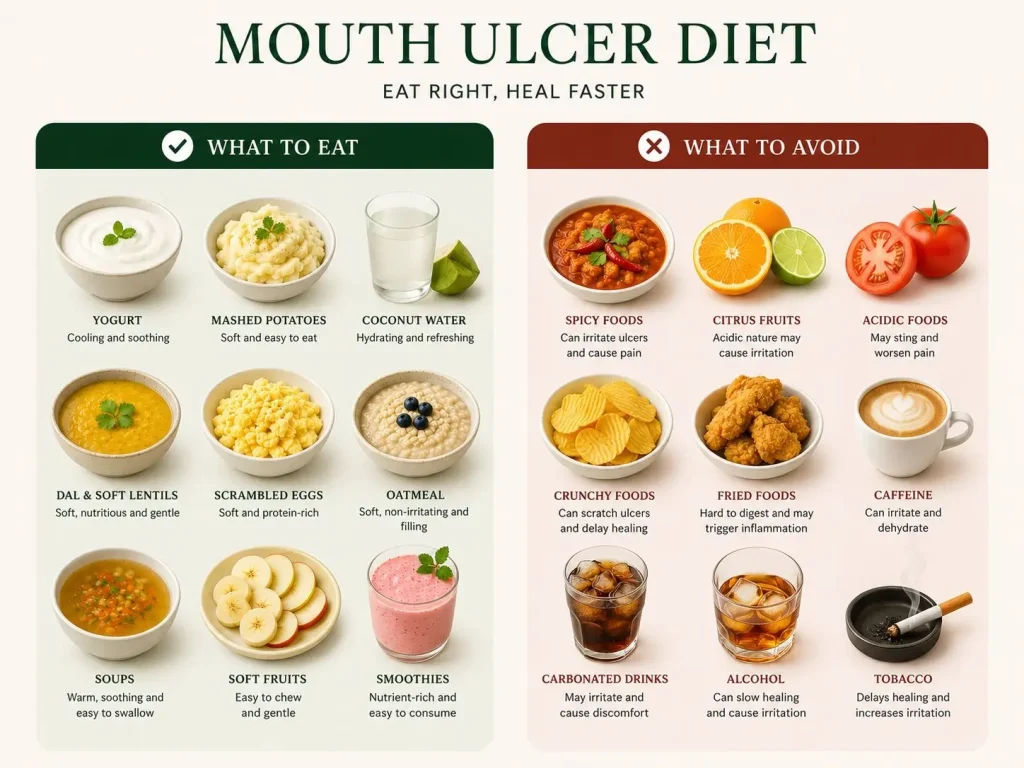
The table covers the list of foods that can help you with your mouth ulcers. These foods are grouped by what each of them actually does for the sore.
| Food Group | Examples | Why |
| Soft, cool foods | Mashed potatoes, oatmeal, idli, dahi (curd), kheer, smoothies, soups | Minimal mechanical friction on the open ulcer surface; cool temperature reduces inflammation |
| Dairy & probiotics | Curd, buttermilk (chaas), paneer, milk | More alkaline than most foods, which lowers surface irritation; probiotics in curd may support oral microbial balance |
| Vitamin B12 sources | Eggs, fish, fortified cereals, dairy | B12 deficiency is one of the most common drivers of recurrent mouth ulcers |
| Vitamin C sources | Bell peppers, papaya, guava (non-acidic ripe fruit) | Supports tissue repair without the acidity of citrus |
| Iron-rich foods | Leafy greens (palak, methi), dal, lean meat | Iron deficiency is linked to recurrent ulceration |
| Zinc sources | Pumpkin seeds, chickpeas, yogurt | May help shorten ulcer duration — ask your dentist before supplementing |
Diet for Mouth Ulcer: Foods to Avoid
Part of any effective diet for mouth ulcer healing is knowing what to leave off your plate. These are the foods most likely to irritate an open sore.
| Food Group | Examples | Why |
| Citrus & acidic foods | Oranges, lemon, tomato, vinegar-based chutneys, tamarind | Acid directly irritates exposed nerve endings on the ulcer surface |
| Spicy / chili-heavy foods | Chili powder, hot curries, achar (pickle) | Capsaicin triggers a sharp pain response on broken tissue |
| Crunchy / hard foods | Chips, toast, raw vegetables, namkeen | Mechanical scraping reopens or worsens the ulcer |
| Salty / fried foods | Papad, salted nuts, pickles, fried snacks | Direct salt contact on an open sore causes a stinging pain response |
| Very hot beverages | Hot tea, hot coffee | Heat aggravates already-inflamed tissue and can delay healing |
Healing Timeline by Diet Stage
| Timeframe | What’s Happening | Diet Guidance |
| Day 1-2 | Sharpest pain, redness around the sore | Soft/cold foods only, saltwater rinse 2-3x, avoid all trigger foods listed above |
| Day 3-5 | Pain starts easing, white/yellow center stabilizes | Reintroduce bland foods (rice, dal, khichdi); continue B12/iron/vitamin-C-rich foods |
| Day 7-10 | Most minor ulcers substantially healed | Gradual return to normal diet; reintroduce mildly acidic/spicy foods last |
| Day 14+ | Should be fully healed (minor ulcers) | If not healed by day 14-21, this is no longer home-care territory — see a dentist |
A Dentist’s Note: When Diet Alone Won’t Fix It
“Diet helps most mouth ulcers heal faster, but recurring ulcers in the same spot are often caused by a sharp tooth edge, an ill-fitting denture, or braces rubbing against the cheek – no amount of dietary change will resolve these until the mechanical cause is corrected. If you notice ulcers always forming in the same location, that’s a sign to get it checked rather than just adjusting your diet further.” Dr. Nayanika Batra – Clove Dental
Frequently Asked Questions (FAQs)
- 1. How to prevent mouth ulcers through diet?
- A diet rich in vitamin B12, iron, vitamin C, and zinc – dairy, eggs, leafy greens, dal, and non-citrus fruit – combined with avoiding spicy, acidic, and hard foods is the most effective dietary approach to preventing recurrent mouth ulcers.
- 2. What to eat during mouth ulcers?
- Soft, cool, bland foods such as curd, khichdi, mashed potatoes, oatmeal, and smoothies are easiest to tolerate while an ulcer is healing.
- 3. What foods should I avoid with a mouth ulcer?
- Avoid citrus fruits, tomatoes, spicy/chili-heavy food, vinegar-based pickles, crunchy snacks, salty fried foods, and very hot beverages until the ulcer heals.
- 4. Can vitamin deficiency cause mouth ulcers?
- Yes – low B12, iron, or folate levels are commonly linked to recurrent mouth ulcers. If ulcers recur frequently, a blood test may be worth discussing with your dentist.
- 5. What is the best food for mouth ulcer healing?
- Curd, khichdi, mashed potatoes, oatmeal, papaya, and leafy greens are among the best food for mouth ulcer healing since they’re soft, cooling, and rich in B12, iron, or vitamin C.
- 6. Is curd good for mouth ulcers?
- Yes – curd is cooling, soft, and more alkaline than most foods, making it one of the better options during an active ulcer, though a small number of people with dairy sensitivity may find it worsens symptoms.
- 7. When should I see a dentist instead of relying on diet changes?
If an ulcer lasts more than 3 weeks, is unusually large or painful, or you’re getting 3+ ulcers a month, diet alone won’t fix the underlying cause – see a dentist for evaluation.
References & Sources
This article reflects clinical guidance from Clove Dental’s dental team and is informed by the following sources:
- Taleb, R., et al. Role of vitamin B12 in treating recurrent aphthous stomatitis: A review. International Journal for Vitamin and Nutrition Research.
- Sumathi, K., et al. Significance of ferritin in recurrent oral ulceration. Journal of Clinical & Diagnostic Research.
- Huynh, N. C. N., et al. Rinsing with saline promotes human gingival fibroblast wound healing in vitro. PLoS One.
- InformedHealth.org. Overview: Canker sores (mouth ulcers). Institute for Quality and Efficiency in Health Care.
Leave a Reply
Book your free consultation today and take the first step towards healthy, beautiful teeth.

Special thanks to our 30 Lakh valued customers
Dental Health
Plan Premium
Buy and Get Benefits at
590/-
in dental Treatments