



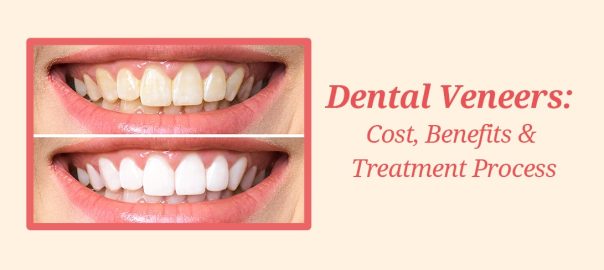
Dental Veneers: Cost, Benefits & Treatment Process

Medically Reviewed By Clove Dental Team
Written By
Dr. Shreya Singh
Last Updated 23 June 2026
Key Takeaways
- Dental Veneers Cost in India – Dental veneer costs vary by material, with composite veneers typically priced at ₹4,000–₹8,000 per tooth and porcelain veneers ranging from ₹10,000–₹22,000 per tooth. Porcelain options cost more due to custom laboratory fabrication and superior aesthetics.
- Porcelain Offers Better Long-Term Value – Composite veneers are more affordable and can often be completed in a single visit, but usually last 5–7 years. Porcelain veneers generally last 10–15 years, resist stains better, and provide a more natural-looking smile.
- Treatment Cost Depends on Several Factors – The final veneer cost is influenced by the number of teeth treated, veneer material, enamel preparation requirements, laboratory customization, and any additional procedures such as whitening or gum contouring.
- Digital Planning Improves Treatment Accuracy – Clove Dental offers digital smile design at select locations, allowing patients to preview expected results before treatment. This technology helps improve treatment planning and supports more informed cosmetic decisions.
- Assess Suitability Before Investing – Patients with healthy enamel, minimal decay, and cosmetic concerns such as stains, gaps, or chipped teeth are often good veneer candidates. A professional evaluation helps determine whether veneers, whitening, orthodontics, or another treatment offers better value.
What Are Dental Veneers?
Dental veneers are thin, custom-made shells that cover the front surface of teeth. They represent a modern alternative for solving numerous front-tooth problems, by providing the combined advantage of strength and enhanced appearance.
They rejuvenate damaged, chipped, or stained teeth, guaranteeing a natural look while preserving tooth functionality.
When do you need Veneers?
Veneers are capable of addressing:
- Minor alignment concerns of teeth where braces or other orthodontic treatment can be avoided.
- Thinning of teeth (due to wear of enamel surface / chipping)
- Discoloration resistant to teeth whitening, seen in cases of developmental disturbances or fluorosis
- Chipped or cracked teeth
Types of Dental Veneers
| Composite Veneers | Porcelain Veneers | Lumineers (Minimal Prep) | |
|---|---|---|---|
| Material | Tooth-coloured resin | Feldspathic/pressed ceramic | Ultra-thin porcelain |
| Cost at Clove | From ₹4,990/tooth | From ₹7,990/tooth | Higher – confirm at consultation |
| Visits needed | 1 (chairside, same day) | 2–3 (prep + lab + bonding) | 1–2 (minimal prep) |
| Enamel removal | Minimal to none | 0.3–0.5mm (permanent) | 0–0.1mm |
| Reversible? | Partially | No | Mostly yes |
| Lifespan | 5–7 years | 10–15 years | 10–20 years |
| Stain resistance | Moderate (polishing helps) | Excellent | Excellent |
| Repairability | Yes – chairside repair possible | No – full replacement needed | Partial |
| Best for | Budget-conscious; first-time veneer patients; reversible option seekers | Long-term aesthetic investment; heavy staining; multiple teeth | Patients avoiding enamel removal |
| Strength | Moderate | High | Moderate–High |
Minimal Prep Veneers – Are They Right for You?
Not all veneers require the same level of tooth preparation. Understanding the differences helps you make a more informed choice.
| No-Prep / Minimal-Prep (Lumineers) | Conventional Prep (Porcelain/Composite) | |
|---|---|---|
| Enamel removal | None to 0.1mm | 0.3–0.5mm |
| Reversible? | Yes (mostly) | No – permanent commitment |
| Thickness | Ultra-thin (0.2–0.3mm) | Standard (0.5–0.7mm) |
| Best for | Teeth with adequate size; minor cosmetic fixes | Worn, chipped, or significantly discoloured teeth |
| Longevity | 10–20 years (Lumineers brand) | 10–15 years (porcelain) |
| Look | Can appear slightly bulkier on some patients | Most natural-looking result |
| Cost at Clove | Higher – premium material and technique | Porcelain from ₹7,990/tooth |
Who is a good candidate for minimal-prep veneers?
- Patients with adequate tooth size (not worn or short)
- Those who want cosmetic improvement but are hesitant about irreversibility
- Patients with good enamel thickness confirmed on clinical examination
Who is NOT a candidate:
- Teeth that are already bulky or protruding – adding ultra-thin veneers without any reduction can look unnatural
- Severely stained teeth (deep intrinsic stains may show through ultra-thin material)
- Significant bite issues or bruxism
How Dental Veneers Correct More Than Just Appearance
Many people assume veneers are purely for aesthetic enhancement, but their benefits go beyond looks:
- Protect & Strengthen Teeth – Veneers act as a shield against enamel erosion and sensitivity, preventing further damage.
- Restore Normal Speech & Chewing – Uneven or worn-down teeth can cause speech difficulties and improper chewing. Veneers restore balance for better oral function.
- Boost Confidence & Well-Being – Dental imperfections affect self-esteem. Veneers enhance your smile and confidence!
- Alternative to Crowns in Certain Cases – When sufficient natural tooth structure remains, veneers may offer a more conservative solution than full crowns. This option preserves more of your original tooth while still providing structural improvement, especially for the front tooth region. Your dentist will determine if your specific situation makes you a suitable candidate.
Discolored Teeth: Which Option to Choose
When dealing with discolored teeth, various treatment options can be considered based on severity, desired results, and dental health. Here’s a comparison of crowns, veneers, and bleaching:
| Crowns | Veneers | Bleaching | |
|---|---|---|---|
| Best For | Severely damaged or decayed teeth | Mild to moderate discoloration | Surface-level stains |
| Cost | Higher | Moderate | Lower |
| Tooth preservation | Requires more reshaping | Minimal reshaping | No reshaping |
| Limitations | Requires more tooth reduction | Less Durable than crowns | Leads to tooth sensitivity |
Step-by-Step Veneer Treatment Process
1. Consultation & Oral Examination
- A dentist evaluates tooth structure, alignment, and gum health.
- Dental X-rays & impressions may be taken for precise treatment planning.
2. Tooth Preparation
- A thin enamel layer (0.5mm) for both porcelain and ceramic only from the front aspect of the tooth surface.
- Minimal or no preparation is needed for Lumineers.
- Shade determination
In case of composite veneers, it’s a chair-side procedure completed the same day. Whereas in case of porcelain veneers, the tooth preparation is followed by lab fabrication of veneers. Advanced techniques have also allowed digital fabrication of custom veneers.
3. Temporary Veneers (If Required)
- Some patients receive temporary veneers till the time lab procedures are getting completed.
4. Veneer Bonding
- Custom-made veneers are permanently bonded to teeth using dental cement.
- A special curing light hardens the adhesive, ensuring durability.
5. Post-Treatment Care
- Avoid biting into hard foods directly – instead break them into smaller pieces first. Your investment deserves protection from unnecessary pressure.
- Dark beverages leave their mark over time despite porcelain’s resistance. Consider enjoying your coffee, red wine, tea and berry treats in moderation or rinse afterward to preserve that pristine appearance.
- Your daily care routine matters tremendously. Select gentler tools for the job: soft-bristled brushes paired with non-abrasive fluoride pastes clean without scratching. Skip those whitening products entirely as they might compromise your veneer’s integrity.
- Tobacco exposure can dim your smile’s brilliance, so avoiding smoke helps maintain that fresh appearance.
- Remember that professional oversight remains crucial – keep those regular dental appointments to ensure everything stays in perfect condition long-term. A clean mouth between visits supports both your natural teeth and your dental enhancements.
How Long Do Veneers Usually Last?
Veneer lifespan varies significantly by material, placement quality, and how well you maintain them. Here’s what to realistically expect:
| Material | Average Lifespan | Key Factor Affecting Longevity |
|---|---|---|
| Composite Veneers | 5–7 years | Prone to staining and chipping over time; can be polished and repaired |
| Porcelain Veneers | 10–15 years | Stain-resistant; can chip if bitten hard; not repairable — must be replaced |
| Lumineers | 10–20 years | Brand-certified; depends heavily on bonding technique |
What shortens veneer lifespan:
- Bruxism (teeth grinding) — the #1 cause of premature veneer failure; a night guard is essential if you grind
- Biting nails, pens, or hard foods directly with veneered teeth
- Using teeth as tools (opening packets, biting thread)
- Skipping regular professional cleaning — composite veneers in particular benefit from 6-monthly polishing
- Consuming large quantities of staining foods and drinks without rinsing
The Cost of Veneers in India
The cost of dental veneers in India ranges from ₹5,000 to ₹25,000 per tooth, depending on material, dentist expertise, and clinic location.
Full Smile Makeover Cost – How Many Veneers Do You Need?
Most patients don’t need a single veneer – a natural looking smile enhancement typically involves 4, 6, or 8 veneers covering the visible front teeth. Here’s what to expect at Clove Dental:
| Smile Scope | Teeth Covered | Composite (from) | Porcelain (from) | Best For |
|---|---|---|---|---|
| 2 front teeth | Upper central incisors | ₹9,980 | ₹15,980 | Chipped or discoloured front two teeth only |
| 4 veneers | Upper 4 front teeth | ₹19,960 | ₹31,960 | Minor chips, slight gaps across the front smile |
| 6 veneers | Upper 6 visible teeth | ₹29,940 | ₹47,940 | Most popular – covers the full natural smile width |
| 8 teeth (full smile makeover) | Upper 8 teeth | ₹39,920 | ₹63,920 | Comprehensive smile transformation; total aesthetic redesign |
| Full mouth (upper + lower) | 12–16 teeth | ₹59,880+ | ₹95,880+ | Complete smile makeover including lower visible teeth |
Important: These are indicative starting costs using Clove’s base per-tooth pricing. Final cost depends on case complexity, any additional procedures (scaling, gum contouring, whitening of adjacent teeth), and the specific material grade selected.
Factors that can influence cost of Veneers
- Number of Teeth – More veneers mean a higher overall cost.
- Material Used – Porcelain veneers cost more but last longer than composite ones.
- Dentist’s Expertise – Specialists may charge more due to their skill level.
- Clinic Location – Metropolitan cities generally have higher treatment costs.
- Additional Procedures – Treatments like scaling, whitening, or gum contouring may be needed before veneer placement.
Why Choose Clove Dental for Your Veneer Treatment
With state-of-the-art technology and experienced specialists, we provide long-lasting, patient-focused solutions for every smile!
At Clove Dental, we offer high-quality dental veneers at consistent pricing across all our clinics. Our expert dentists ensure that patients receive precise, durable, and natural-looking veneers at competitive rates:
| Treatment Category | Starting Price |
|---|---|
| Porcelain Veneers | ₹7,990 onwards/tooth |
| Composite Veneers | ₹4,990 onwards/tooth |
If you’re considering veneers, consult an experienced dentist to discuss your specific needs. Schedule an appointment at Clove Dental today for expert guidance and a beautiful, healthy smile!
How is the Higher Cost of Veneers Justified?
- Customization: Each veneer is tailor-made to match your natural teeth, ensuring a perfect fit and aesthetic.
- Durability: Porcelain veneers last longer than ceramic ones if one maintains good oral hygiene and follows their dentist’s instructions.
- Biocompatibility: High-quality materials used in veneers do not harm gums or surrounding teeth.
- Minimal Tooth Alteration: Unlike crowns, veneers require minimal reshaping of the natural tooth structure. Thus they offer an advanced solution.
- Advanced Solution & Intricate Fabrication: Veneers offer an advanced solution to preserve natural tooth structure. The intricate fabrication process also adds to the overall cost of the procedure.
FAQs About Veneers Cost & Treatment
- 1. How much do veneers cost in India?
- The cost of dental veneers in India ranges from ₹5,000 to ₹25,000 per tooth, depending on material, dentist expertise, and clinic location.
- 2. Can veneers fix gaps in teeth?
- Yes, veneers can seamlessly close minor gaps by being custom-designed slightly wider than your natural teeth to fill the empty space. This offers an instant, single-visit alternative to braces, provided the gaps aren’t caused by severe structural bite misalignment.
- 3. Is the veneer procedure painful?
- No. The process is minimally invasive and may be performed under local anesthesia to minimise discomfort.
- 4. Are dental veneers permanent, and can they be removed?
- Whether veneers are permanent depends on the type you choose. Conventional porcelain and composite veneers are permanent because the dentist must remove a thin layer of enamel (about 0.3mm to 0.5mm) to make room for them, which cannot be reversed. However, Minimal-Prep veneers or Lumineers require almost no enamel removal, making the process mostly reversible if you ever decide to remove them.
- 5. Are veneers suitable for people with sensitive teeth?
- Mild sensitivity is common for 1–2 weeks after veneer placement as teeth adjust to the bonded material. Patients with pre-existing sensitivity should discuss this with their Clove dentist before treatment – in some cases, a desensitising protocol before and after placement is recommended.
- 6. What is the difference between veneers and dental crowns?
- Veneers cover only the front surface of a tooth (0.3–0.5mm enamel removal). Dental Crowns encase the entire tooth (requires removing 1–2mm of tooth structure from all sides). Veneers are appropriate when the tooth structure is largely intact and the concern is cosmetic. Crowns are necessary when a tooth is severely decayed, cracked, or has had a root canal – situations where full coverage and structural reinforcement are needed.
- 7. Can I drink tea, coffee, or wine with dental veneers?
- Porcelain and Lumineers are highly stain-resistant, meaning your morning coffee or tea won’t easily discolor them. Composite resin veneers, however, are more porous and will stain over time just like natural teeth. Regardless of the material, it is always a good idea to enjoy dark beverages in moderation and rinse your mouth with water afterward to maintain a bright, even smile.
- 8. What happens if a dental veneer chips or comes off?
- If a composite veneer chips, it can usually be easily repaired or polished by dentist in a single visit. If a porcelain veneer chips or breaks, it cannot be patched up; it must be completely replaced. If a veneer completely detaches but remains fully intact, keep it safe and call your clinic immediately – your dentist may be able to clean and re-bond it to your tooth.
References and Sources
- Gurel G, et al. “Influence of Enamel Preservation on Failure Rates of Porcelain Laminate Veneers.” International Journal of Periodontics & Restorative Dentistry, 2013. – https://pubmed.ncbi.nlm.nih.gov/23820748/ (Clinical study showing that veneers placed with maximum enamel preservation have significantly lower failure rates – supports conservative prep recommendations.)
- Layton DM, Walton TR. “An Up to 16-Year Prospective Study of 304 Porcelain Veneers.” International Journal of Prosthodontics, 2007. – https://pubmed.ncbi.nlm.nih.gov/17760246/ (16-year prospective clinical study confirming porcelain veneer survival rates of 91% at 16 years with proper patient selection and cementation technique.)
- Peumans M, et al. “Porcelain Veneers: A Review of the Literature.” Journal of Dentistry, 2000. – https://pubmed.ncbi.nlm.nih.gov/10787835/ (Comprehensive review of porcelain veneer clinical evidence covering adhesion, longevity, and failure modes – foundational reference for the 10-15 year lifespan data.)
- Clove Dental – Dental Veneers Cost, Benefits & Treatment Process. https://clovedental.in/blog/general-dentistry/dental-veneers-cost-benefits-treatment-process
Leave a Reply
Leave a Reply
Book your free consultation today and take the first step towards healthy, beautiful teeth.

Special thanks to our 30 Lakh valued customers
Dental Health
Plan Premium
Buy and Get Benefits at
590/-
in dental Treatments



Leave a Reply