


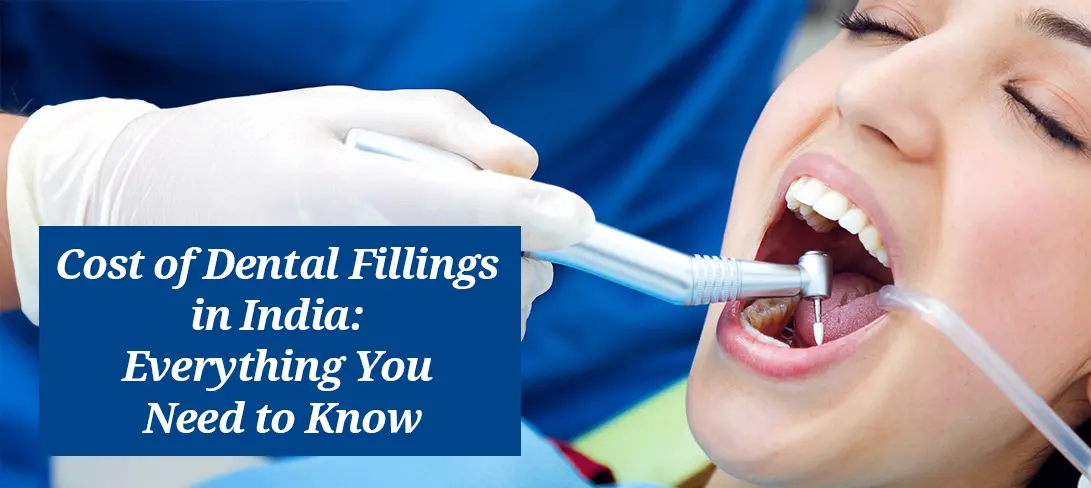
Cost of Dental Fillings in India: Everything You Need to Know

Medically Reviewed By Clove Dental Team
Written By
Dr. Shreya Singh
Last Updated 15 June 2026
Key Takeaways:
- Dental Filling Cost in India – Dental filling costs in India generally start from ₹850 and can range up to ₹4,190 or more, depending on the filling material, cavity size, and complexity of the restoration required.
- Filling Material Drives Pricing – Composite fillings start at ₹850, GIC fillings at ₹1,590, metal inlays/onlays at ₹2,990, and ceramic inlays/onlays at ₹4,190. More durable and customized restorations typically cost more due to laboratory fabrication and advanced materials.
- Early Treatment Saves Money – Treating a small cavity with a filling is significantly less expensive than delaying care. Untreated decay can progress to the tooth pulp, leading to root canal treatment and crowns that may cost several times more.
- Several Factors Affect Final Cost – The total price depends on cavity depth, tooth location, number of affected surfaces, filling material, and whether additional procedures such as X-rays, tooth build-up, or indirect restorations are needed.
- Technology and Expertise Improve Outcomes – Clove Dental highlights experienced dentists, digital diagnostics, advanced restorative materials, standardized WHO-based sterilization protocols, and a network of 715+ clinics with transparent pricing across India.
What is Dental Filling?
Dental Filling is a common dental procedure that is used to fix a tooth that has been damaged by decay, cracks, or minor fractures. It comprises the cleaning & preparation of the area which involves the removal of all the infected and soft parts and then, the area is filled with suitable material for the restoration of its proper function and the prevention of further damage.
How to Know If You Need a Dental Filling?
You may be unsure about needing a dental filling. Sometimes the dental cavities are so visible that you can yourself easily notice in your mouth but there are few signs which indicate you may have cavities present in some inaccessible areas.
Furthermore, some warning signs which specify that you may have cavities are:
- Sensitivity to hot, cold, or sweet foods
- Pain when chewing or biting down
- Visible holes, pits, or dark spots on teeth
- Food getting stuck frequently in the same area
- A rough or chipped surface when running your tongue over the tooth, making you more likely to engage your tongue or repeatedly prick that area.
When you notice one or more of these symptoms, you should go to your dentist for a checkup before it worsens.
Why Do You Need a Dental Filling?
Dental fillings are essential for:
- Treatment of cavities, thereby preventing them from getting worse.
- Correction of minor cracks or breaks in teeth that may occur as a result of various physical activities such as grinding or eating hard foods.
- Building the shape and function of the damaged tooth back up to its normal status, or else it will lose its shape and function.
- Preventing food particles from accumulating in gaps.
- Diminishing the probability of sensitivity teeth to cold temperatures as a consequence of the loss of enamel.
However, not all the dental cavities can be treated with fillings. If the decay has indeed weakened the tooth structure, your dentist will decide whether a root canal treatment followed by a crown brings the right solution to the problem.
Does Getting a Dental Filling Hurt?
Most patients experience little to no pain during a filling procedure. You may feel discomfort or extreme sensitivity when your dentist uses a tooth drill to prepare the area. In cases of heightened sensitivity, they may suggest local anesthesia to minimize discomfort.
While some patients may not require numbing, others might experience mild sensitivity after the filling, which usually subsides within a few days.
How is It Determined Whether a Problem Can Be Solved with a Filling?
- When a filling is sufficient: If the cavity is small and has not reached the inner pulp, a filling is the best solution.
- Why an RCT may be required: In some cases, cavities extend deeper than expected. If the decay is close to the pulp, removing the damaged part may expose the nerve, requiring a root canal treatment (RCT) instead of a simple filling.
- Excavation revealing deeper damage: Sometimes, while cleaning out the decay, the dentist discovers that the damage is more extensive than initially seen in X-rays, necessitating further treatment like an RCT.
How Dentists Choose Filling Material
Your dentist doesn’t pick a filling material randomly. Several clinical factors determine the right choice:
Front vs back tooth: Front teeth (incisors, canines) are highly visible, so composite or ceramic fillings that match tooth colour are almost always preferred. Back teeth (molars, premolars) bear the greatest chewing load, so strength is the primary consideration – composite or ceramic inlays are used here too, though material thickness matters more.
Aesthetics vs strength: Composite resin balances both reasonably well. Ceramic offers the most natural look but at a higher cost. Glass ionomer is weaker but useful in specific situations.
Moisture control: Some filling materials require a completely dry field to bond properly (composite). In areas where moisture control is difficult – near the gumline, in young children, or in hard-to-isolate areas – glass ionomer is preferred because it bonds in slightly moist conditions and releases fluoride.
Grinding habits: Patients who grind their teeth (bruxism) put excessive force on fillings. In such cases, harder, more wear-resistant materials or a custom night guard alongside the filling may be recommended.
Cavity size: Small, single-surface cavities are best restored with composite. Larger, multi-surface cavities – especially in back teeth – may require an indirect ceramic inlay fabricated in a lab for a better fit and long-term strength.
Types of Dental Fillings and Their Characteristics
Different types of fillings offer various benefits. Here’s a comparison:
| Type | Durability | Appearance | Cost |
|---|---|---|---|
| Composite | 5-10 years | Tooth-colored | Medium |
| Ceramic | 10-15 years | Natural-looking | High |
| Glass Ionomer | 5-7 years | Tooth-colored | Medium |
Some dentists may still be practicing silver filling material (dental amalgam) but that is not advisable because it contains mercury which is having severe health hazards. If you have old silver fillings in your teeth, better get it replaced sooner than later.
Front Tooth vs Back Tooth Fillings
The location of your cavity dictates both the treatment approach and the restorative materials used:
- Front Tooth Fillings: These focus heavily on appearance. Dentists prioritize seamless shade matching and natural translucency using composite resins. Because front teeth do not experience heavy grinding impact, aesthetic value takes precedence over pure physical strength.
- Back Tooth Fillings: These focus on functionality and endurance. Molars bear the brunt of your jaw’s crushing and chewing forces. Fillings placed here require durable materials – like heavy-duty composites, glass ionomers, or porcelain inlays – to withstand repetitive friction without cracking.
Which Filling is Right for You?
Solved with a Filling?
- For natural aesthetics: Composite or ceramic fillings are best.
- For longevity and strength: Almost all fillings work well, final decision based upon the depth of cavity and the location of cavity.
- For affordability: Amalgam or glass ionomer fillings are cost-effective. Although amalgam is no longer the preferred choice as its disposal is an environmental hazard.
- For children’s teeth: Glass ionomer is the type of filling which is usually used for children due to its fluoride releasing capability.
These suggestions show general considerations; however, the best filling for you depends on the status of the tooth, the surfaces involved, your personal hygiene, and the depth of the cavity. The doctor will evaluate these factors and introduce you to the most suitable material for long-term oral health.
How Much Does a Dental Filling Cost in India?
The cost of dental fillings varies depending on multiple factors:
Type of filling material (composite, ceramic, gold, etc.)
- Size and location of the cavity(larger cavities require more material and time)
- Dentist’s expertise and clinic reputation
- Clinic location (urban clinics may have higher costs)
- Additional procedures required before filling (such as cleaning or pulp capping)
- Technology used(advanced techniques may be more expensive but provide better results
Why Choose Clove Dental?
- Transparent and consistent pricing, regardless of location or dentist.
- 600+ dental clinics across India provide expert dental care.
- Skilled dentists with years of experience.
- Advanced technology ensures painless and precise procedures.
- Hygienic and safe treatment environment for patient comfort and successful outcomes.
Cost of Dental Fillings at Clove Dental
Clove Dental provides high-quality dental fillings at competitive prices with experienced dentists across 600+ clinics in India.
- Composite fillings: ₹1,040 – ₹4,000 per tooth.
- Glass ionomer fillings: ₹1,040 – ₹4,000 per tooth.
- Expert consultation: Personalized treatment plans based on your needs.
(Price as on March 28th, 2025)
What’s Included in the Filling Cost at Clove
When you get a filling at Clove Dental, the price covers more than just the material. Here is what is typically included:
- Clinical examination of the affected tooth and adjacent teeth
- Digital X-ray (if required) to assess cavity depth and proximity to the pulp
- Tooth preparation – removal of decayed tissue using a dental drill or laser
- Isolation – rubber dam or cotton roll placement to keep the area dry
- Filling placement and bonding – material applied in layers and cured with UV light (for composite)
- Bite adjustment – the filling is shaped and polished so it does not interfere with your natural bite
- Post-procedure guidance on eating, sensitivity management, and follow-up
Additional procedures such as pulp capping, build-up for severely broken teeth, or a second visit for ceramic inlays are charged separately and will be communicated upfront.
Common Mistakes After Getting a Filling
Getting a filling is straightforward, but what you do in the hours and days after matters considerably. These are the most common errors patients make:
Chewing hard food too soon: Some materials – particularly glass ionomer – need additional setting time. Chewing on hard foods like nuts, crusty bread, or ice immediately after can dislodge or crack a new filling before it has fully hardened. Follow your dentist’s specific instructions on when to eat normally.
Ignoring bite discomfort: If the filling feels high or uneven when you close your mouth, do not wait it out. A slightly overfilled restoration creates uneven pressure on the tooth, which can cause the filling to crack or lead to jaw discomfort over time. Call your clinic – a bite adjustment takes under five minutes.
Skipping the follow-up: Many patients assume a filling means the tooth is permanently fixed and stop returning for check-ups. Regular visits allow your dentist to check the filling’s margins, detect any new decay around it, and catch early failure before it becomes a larger dental problem.
Delaying replacement of an old filling: Fillings do not last forever. A composite filling that is 8–10 years old may show micro-cracking or marginal breakdown that is not yet painful. Proactive replacement at this stage is far simpler and cheaper than waiting until the filling fails completely and secondary decay sets in underneath.
FAQs on Dental Fillings
1. Is teeth gap filling safe?
Yes. Modern gap filling and dental bonding techniques are completely safe when performed by a qualified dentist. Whether you’re fixing a cavity or closing a small space between teeth, materials like composite resin are biocompatible and long-lasting. If you’re considering it, ask your dentist for a full cost breakdown so you know your teeth filling cost upfront.
2. How long do dental fillings last?
The lifespan depends on the material, tooth location, and your oral hygiene routine.
- Composite fillings: Usually 5–10 years.
- Ceramic fillings: Around 10–15 years.
- Gold fillings: Often 15 years or more.
If you’re investing in high-quality materials, your composite filling cost may be higher, but the durability often makes it worth it.
3. Can I eat immediately after a dental filling?
With most of the recently available filling materials we can eat immediately after filling. but few filling materials like GIC (Glass Ionomer Cement) need extra time for setting so your dentist may advise you to take care for the next 24 hrs. Always make it a point to follow your dentist’s instructions for best post op results.
4. Is a dental filling permanent?
Fillings aren’t permanent, but with good care they can last many years. Even if you’ve paid a higher dental filling cost for premium materials, you’ll still need regular dental check-ups to maintain them.
5. What are the signs that I need a filling?
- Tooth sensitivity to hot or cold foods.
- Visible holes or dark spots on teeth.
- Pain while chewing.
- Cracked or broken tooth structure.
If you notice any of these, get an evaluation. Acting early can reduce your overall cost.
6. Can dental fillings be replaced?
Yes. If your filling is cracked, worn, or loose, your dentist can replace it. Often the how much does composite filling cost question comes up here—replacement prices are similar to initial treatment, and in some cases lower if it’s a straightforward swap.
7. How much does a dental filling cost in India?
The teeth filling cost in India varies depending on the type of material and the clinic. Composite resin fillings typically range between ₹1,00–₹4,000 per tooth, while ceramic and gold fillings are more expensive. For exact pricing, ask your dentist or check your Clove Dental clinic near you.
8. Why is there sensitivity after getting a filling – and how long does it last?
Mild sensitivity after a filling is normal and usually lasts between a few days to two weeks. It occurs because the tooth’s nerve has been mildly irritated during the drilling and preparation process
Final Thoughts
Timely intervention to stop decay from progressing is vital to oral health and regular dental visits coupled with a quick filling of minor cavities the moment they occur can prevent significant teeth damage and expensive treatments later on.
Dental fillings offer a practical and cost-efficient solution for repairing damaged teeth. At Clove Dental, we offer professional care at affordable rates in over 600 clinics throughout India, guaranteeing excellent and secure dental services.
If you require a filling, schedule an appointment today to keep your oral health in good shape!
Call now or visit your nearest Clove Dental clinic!
References and Sources
This article is informed by the following authoritative sources:
Ishida Y, Aoki H, et al. “Effects of Removal Conditions on Mercury Amount Remaining in the Oral Cavity and inside Drainage System after Removing Dental Amalgams.” International Journal of Environmental Research and Public Health, 2021. https://www.ncbi.nlm.nih.gov/pmc/articles/PMC8700763/
Mutter J, et al. “Rethinking the Dental Amalgam Dilemma: An Integrated Toxicological Approach.” International Journal of Environmental Research and Public Health, 2019. https://www.ncbi.nlm.nih.gov/pmc/articles/PMC6466133/
Minamata Convention on Mercury – United Nations Environment Programme. https://www.mercuryconvention.org
Leave a Reply
Leave a Reply
Book your free consultation today and take the first step towards healthy, beautiful teeth.

Special thanks to our 30 Lakh valued customers
Dental Health
Plan Premium
Buy and Get Benefits at
590/-
in dental Treatments



Leave a Reply