


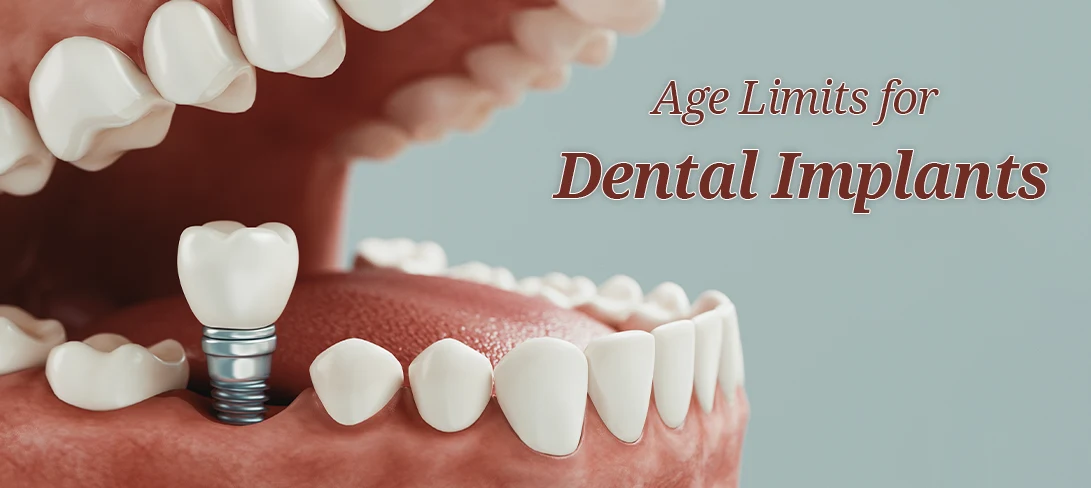
Age Limits for Dental Implants

Medically Reviewed By Clove Dental Team
Written By
Dr. Shreya Singh
Last Updated 11 November 2025
Can You Be Too Old or Too Young?
It’s a question almost every implant patient asks at some point: “Am I at the right age for dental implants?”
The simple answer? Probably yes.
dental implant have become one of the most reliable ways to replace missing teeth – from teenagers who lose a tooth sometimes in the school playfields to seniors seeking better stability than dentures. But while age alone isn’t a barrier, your stage of growth, bone quality, and overall health do make a difference.
Let’s explore what really matters when it comes to age and dental implants.
How Dental Implants Work: A Quick Refresher
A dental implant is essentially a small titanium post that acts as a tooth root. Once placed into the jawbone, it fuses with the bone through a natural healing process called osseointegration.
This process is what gives implants their unmatched strength and longevity. However, it also explains why age – or more specifically, bone maturity and density – can influence timing and treatment planning.
In young patients, the jaw is still growing. In older adults, the bone may become thinner or less dense. Both situations call for thoughtful evaluation rather than a simple yes or no.
Basically placement of dental implants needs: Good available bone height, width, and optimal bone density.
The success of dental implants depends on –
- Healing capacity of individual
- Oral hygiene
- Presence of detrimental habits – smoking, tobacco chewing
- Presence of systemic conditions like diabetes (controlled or not), vitamin D levels
- Medications
- Previous treatments
Since in older individuals the overall health is jeopardized. Most of the individuals are affected by certain diseases and are on treatments; so placing an implant should be done judiciously. After assessing all the factors a dentist is the best judge to evaluate which replacement option is best suited and has good success rates.
Delaying the treatment after tooth loss often leads to significant bone loss in the area which can compromise the decision of implant placement. So be it a young or older patient; it is always advisable to look for replacement or rather plan a replacement before taking out a tooth.
Dental Implants in Younger Patients
It might seem like a permanent fix for a lost tooth, but for children and early teens, implants usually have to wait.
Here’s why:
- The jaw continues to grow until about 16–18 years in girls and 18–21 years in boys.
- Placing an implant too early means it could stay fixed while the surrounding jaw keeps developing – causing it to “sink” or look misplaced later.
- Typical minimum age: around 12–14 years for some front-tooth cases, once most growth has slowed and all permanent teeth have erupted.
Special situations:
- If a teenager loses a tooth due to trauma or has a missing tooth from birth (a condition called congenital agenesis), dentists may plan a temporary solution – such as a removable or bonded prosthesis – until growth is complete.
- Modern tools like hand-wrist X-rays or cervical spine analysis help determine whether it’s safe to move forward.
Key idea: Implants last decades – waiting an extra year or two ensures they’ll stay in harmony with the patient’s growing face.
Adults: The Prime Age for Implant Success
For adults, the story is far simpler. Between the ages of 26 and 65, most people have fully matured bones and good healing capacity – the perfect foundation for long-term implant success.
At this stage, age itself isn’t a limitation. What matters more are lifestyle and health factors such as:
- Controlled diabetes or hypertension
- Smoking status (smoking delays healing)
- Gum health and oral hygiene
- Medication use (some drugs affect bone metabolism)
Studies show implant success rates in healthy adults range from 95–98 %, proving that well-planned implants function just like natural teeth for decades.
Dental Implants in Older Adults and Seniors
Now, what about the other end of the age spectrum?
Good news – there’s no upper age limit for dental implants. Seniors well into their 70s and 80s receive them successfully every day.
What matters is not the number on your birthday cake, but your general health and bone quality. Before surgery, your dentist will evaluate:
- Bone density (especially in patients with osteoporosis)
- Cardiovascular health and medication use
- Blood sugar control
- Use of blood thinners or bisphosphonates
If bone is thin, modern techniques like bone grafting, short implants, or wider-diameter fixtures can still achieve stability. For older patients, the approach is often minimally invasive – shorter surgery, quicker recovery, and tailored aftercare.
Many seniors choose implants to escape the frustration of loose dentures. The ability to chew comfortably and smile confidently often improves nutrition, speech, and even social wellbeing.
“Too old” isn’t the issue – being too late in deciding to restore missing teeth sometimes is.
With recent advances in technology, we are able to place implants even in cases where there is severe bone loss. Minor surgical procedures like bone augmentation, ridge splitting, bone grafting, sinus lifts and the introduction of basal implants has really changed the scenario for choosing the right tooth replacement option for an individual. If the overall health of an individual allows them to undergo these procedures, then even an older individual with diminished bone dimensions becomes a candidate for implants.
The Role of Overall Health
Age interacts with health, and that’s where proper screening matters most. Conditions such as:
- Osteoporosis (affects bone density) or other bone diseases
- Rheumatoid arthritis (affects healing)
- Uncontrolled diabetes (raises infection risk)
- Medications that influence bone healing
…don’t automatically disqualify you, but they do require coordination between your dentist and physician.
Certain medications – like bisphosphonates, steroids, or blood thinners – need special attention. Your dentist may modify the plan or consult your doctor before surgery.
The Evaluation Process: How Dentists Decide
A thorough implant assessment goes far beyond checking your age.
Here’s how the typical process unfolds:
- Comprehensive medical and dental history – to understand risks and medications.
- CBCT scan – a 3D image to measure bone height and density.
- Growth assessment (for patients under 25).
- Health and risk analysis – smoking, diabetes, blood pressure, systemic conditions.
- Discussion and consent – your dentist explains options, costs, and expected outcomes.
Each plan is individualized – from implant length and placement angle to loading time – to match your biology and lifestyle.
Planning and Care Across Ages
- Younger patients: May use temporary prostheses or delayed loading until growth completes.
- Adults: Can benefit from immediate loading implants (same-day crowns) if bone quality is good.
- Older adults: May need bone grafts or mini/zygomatic implants in areas with significant bone loss.
The key is personalization – there’s no one “best age,” only the best plan for you.
Aftercare and Maintenance
Implants, regardless of age, demand good hygiene.
- Brush twice a day with a soft brush and non-abrasive toothpaste.
- Floss or use interdental aids daily.
- Get professional cleaning and radiographic check-ups every 6 months (seniors: every 3 months in the first year).
- Avoid smoking – even light smokers have 2–3× higher risk of early implant failure.
A well-maintained implant can last a lifetime. Poor hygiene can shorten its life faster than any age factor ever could.
Why Clove Dental Focuses on Age-Appropriate Implant Care
At Clove Dental, every implant case starts with one simple rule – treat the patient, not the number.
Our specialists use digital scans and advanced 3D planning to customize implants for each stage of life, be it growth-sensitive planning or immediate-loading solutions or even short, wide, or graft-supported implants for low bone density.
We collaborate closely with medical professionals whenever needed – ensuring every implant is safe, stable, and designed to last.
Whether you’re 18 or 80, the goal remains the same: to restore comfort, confidence, and function.
Frequently Asked Questions
- Q. What’s the youngest age for dental implants?
- Usually after age 15–16, once jaw growth has slowed and permanent teeth have erupted.
- Q. Can a 70-year-old get implants on blood thinners?
- Yes, with proper medical coordination and adjustment by your dentist and physician.
- Q. Are dental implants safe for older adults?
- Absolutely. With modern techniques and proper evaluation, age isn’t a barrier.
- Q. Will an implant affect jaw growth in teenagers?
- If placed too early, yes – which is why growth assessment is essential before surgery.
Final Thoughts
There’s no “perfect” age for dental implants – only the right timing based on your growth, bone health, and medical profile.
You can be too young if your jaw is still developing, but never too old if your health allows.
If you’ve been postponing tooth replacement because of age, it’s time to rethink that.
Talk to a qualified Implantologist at Clove Dental, and discover how modern implant care can help you smile – confidently – at any stage of life.
Leave a Reply
Leave a Reply
Expert Guidance for Healthy Smiles
Book your free consultation today and take the first step towards healthy, beautiful teeth.

Membership Plans
Special thanks to our 30 Lakh valued customers
Dental
Health Plan
Buy and Get Benefits at
₹440/-
in dental Treatments
Explore More Similar Posts
Explore More Blogs



Leave a Reply