


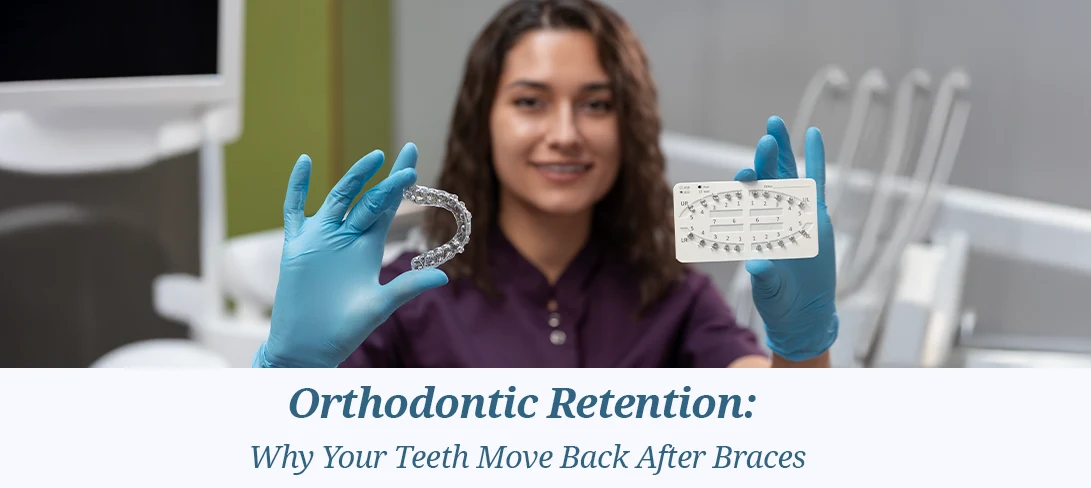
Orthodontic Retention: Why Your Teeth Move Back After Braces

Medically Reviewed By Clove Dental Team
Written By
Dr. Shreya Singh
Last Updated 11 November 2025
Introduction
You’ve spent months – maybe even years – wearing braces or aligners to get your teeth perfectly straight. The day they finally come off feels amazing. But then, a few weeks later, you notice something strange: a small gap reappearing, a tooth slightly turning, or your bite not feeling the same.
Don’t worry – it’s not your fault. It’s just biology.
Your teeth have a natural tendency to shift back toward their old positions after treatment. This is where the most overlooked stage of orthodontics begins: retention.
How Orthodontic Retention Works: A Quick Overview
Think of retention as the “lock-in” phase that helps your teeth remember their new alignment. When braces or aligners move your teeth, the supporting bone and fibers around each tooth are stretched and remodeled.
Here’s what’s happening beneath the surface:
- The bone around your teeth softens on one side and builds up on the other during movement. Once treatment ends, that bone takes months to harden fully again.
- The periodontal ligament (PDL) – tiny elastic fibers that hold each tooth – still “remember” where the tooth used to be.
- Everyday habits like chewing, biting, and even swallowing exert gentle pressure that can nudge teeth slightly over time.
Retention gives your bones and gums enough time to settle and adapt so your smile stays as perfect as the day the braces came off.
Why Teeth Shift Back After Braces
It’s completely normal for teeth to move a little – but without proper retention, that shift can become noticeable. Here’s why relapse happens:
- Elastic memory: The stretched PDL fibers act like small rubber bands trying to pull teeth back.
- Growth and aging: Young patients continue to grow, and even adults experience slow jaw changes throughout life.
- Biting forces: Chewing, clenching, or grinding applies daily pressure on teeth.
- Incomplete finishing: If the teeth or roots weren’t perfectly positioned at the end of treatment, they may drift slightly.
- Poor retainer use: Skipping wear, even for a few nights early on, can undo months of hard work.
Retention isn’t optional; it’s the bridge between treatment and lifelong results.
Types of Retainers and How They Work
| Type | Description | Wear Schedule | Advantages | Considerations |
|---|---|---|---|---|
| Fixed (Bonded) Retainer | Thin wire glued to the back of teeth (usually lower front). | 24 h indefinitely (unless removed). | No daily effort; excellent stability. | Needs careful cleaning; wire can break or collect plaque. |
| Removable Hawley | Acrylic plate with a metal wire across the front. | Full-time 1–3 mo → Night-only later. | Adjustable, durable. | Visible wire; needs patient compliance. |
| Clear Essix/Vivera | Transparent, snug-fitting plastic trays. | Full-time 1–2 mo → Night-only long-term. | Aesthetic, comfortable. | Can wear out; needs replacements over time. |
| Hybrid Retainer | Combination of fixed lower + removable upper. | Night-only after initial phase. | Best balance of stability and comfort. | Slightly higher maintenance. |
Your orthodontist chooses based on your treatment type, bite, and how much your teeth were moved.
The Retention Timeline: What to Expect
Retention is not a “one-and-done” phase – it’s a gradual process. Most orthodontists follow a pattern like this:
- First 4–6 weeks: Full-time wear (22–24 hours/day).
- Next 2–3 months: Transition to night-only wear.
- After 6–12 months: Continue night-only indefinitely.
Yes, indefinitely. Teeth never stop adapting, and long-term wear ensures lasting alignment.
Many adults who stopped wearing retainers too early end up needing minor correction years later – easily preventable with consistent night wear.
Who’s More Likely to Relapse
Some smiles need extra care to stay stable:
- Teenagers: Their jaws are still developing.
- Patients with major crowding or spacing corrections.
- Those who had extractions during orthodontic treatment.
- People with gum disease or bone loss.
- Patients who forget or skip retainer wear.
- Habit-related cases: tongue thrusting, thumb sucking, or teeth grinding.
In these cases, orthodontists may recommend permanent retainers or longer full-time wear before switching to nights.
How to Maintain Your Straight Smile
Retention is a lifelong habit, but it doesn’t have to be hard. Here are practical ways to keep your new smile in line:
- Clean your retainers daily. For removable retainers use gentle soap and cool water (avoid hot water) and in case of fixed ones, clean around them carefully using interdental brushes.
- Store them in a case when not in use – never wrap them in tissue, you might end up misplacing them.
- Check for fit – if it feels tight after skipping nights, wear it longer each night until comfortable.
- Attend recall visits at 1 month, 3 months, 6 months, and annually.
- Keep your gums healthy – periodontal inflammation can loosen teeth and speed relapse.
- Replace worn or cracked retainers promptly.
- For bonded retainers, ask your dentist to inspect the wire at every cleaning visit. A tiny detachment can allow teeth to shift unnoticed.
Why Clove Dental Emphasizes Long-Term Orthodontic Care
At Clove Dental, we believe that orthodontic success doesn’t end with braces – it’s what happens after that truly matters.
Our orthodontists design personalized retention plans based on age, bone health, and treatment type. Using digital scans, we track the tiniest movements over time – sometimes as small as half a millimeter – to ensure your smile stays perfectly aligned.
Whether you wore braces or aligners, your retention plan will include:
- The right retainer type for your case.
- Regular digital monitoring and recall visits.
- Education on hygiene and long-term care.
Retainers are not a phase – they’re your smile’s lifelong insurance policy, helping you safeguard your investment.
Frequently Asked Questions
- Q. Do I really need to wear a retainer forever?
- For most people, yes. “Forever” usually means wearing it a few nights a week long-term.
- Q. Can I switch from a Hawley to a clear retainer later?
- Absolutely. Once alignment is stable, many patients move to clear retainers for comfort.
- Q. My retainer feels tight – what should I do?
- Wear it full-time for a few days. If it still feels tight or doesn’t fit, visit your orthodontist.
- Q. How long does a bonded retainer last?
- With good hygiene and regular checks, 5–10 years or more.
- Q. What happens if I lose my retainer?
- Contact your clinic immediately – a few weeks without wear can cause visible relapse.
Final Thoughts
Your orthodontic journey doesn’t truly end when your braces come off – it simply enters a new stage. Retention keeps your smile in the position you worked so hard to achieve.
So wear your retainers, care for them, and attend your follow-ups. Those few minutes each night can make the difference between a smile that lasts a lifetime and one that slowly drifts back.
Clove Dental is here to guide you at every step – from alignment to long-term maintenance – so your smile stays exactly where it belongs.
Leave a Reply
Leave a Reply
Expert Guidance for Healthy Smiles
Book your free consultation today and take the first step towards healthy, beautiful teeth.

Membership Plans
Special thanks to our 30 Lakh valued customers
Dental
Health Plan
Buy and Get Benefits at
₹440/-
in dental Treatments
Explore More Similar Posts
Explore More Blogs



Leave a Reply